Range-bound trading using Pivot points
The beauty of using pivot points is that you can use it simply as using support and resistance levels. So the strength of support and resistance at different pivot levels is determined by the number of times the price bounces off the pivot level. The more a currency pair touch...
The beauty of using pivot points is that you can use it simply as using support and resistance levels. So the strength of support and resistance at different pivot levels is determined by the number of times the price bounces off the pivot level. The more a currency pair touches a pivot level and reverses, the stronger the level becomes. Pivoting simply means reaching a support or resistance level and then reversing. Hence, the word “pivot”. 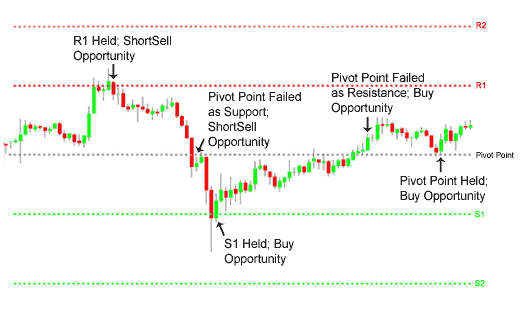 If the pair is nearing an upper resistance level, you could sell the pair and place a tight protective stop just above the resistance level. The picture above shows the different ranging opportunities that present themselves over a short period. If the pair keeps moving higher and breaks out above the resistance level, this would be considered an upside “breakout”. You would also get stopped out of your short order but if you believe that the breakout has good follow-through buying strength, you can re-enter with a long position. You would then place your protective stop just below the former resistance level that was just penetrated and is now acting as support. If the pair is nearing a lower support level, you could buy the pair and place a stop below the support level.
../../trading-courses/technical/pivot-points-trading) ../../trading-courses/technical/breakout-trades-with-pivot-points)
Ready to Practice This Strategy?
Test what you learned on a free, risk-free demo account before risking real money.